Project Summary
- Location: Indonesia
- Industry: Machining and metal processing
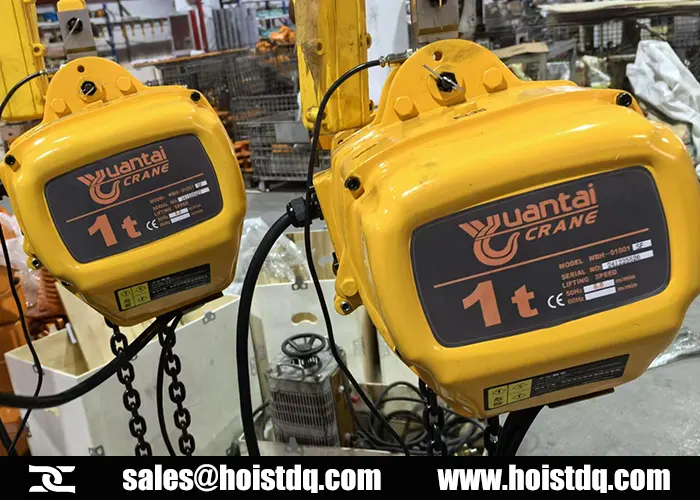
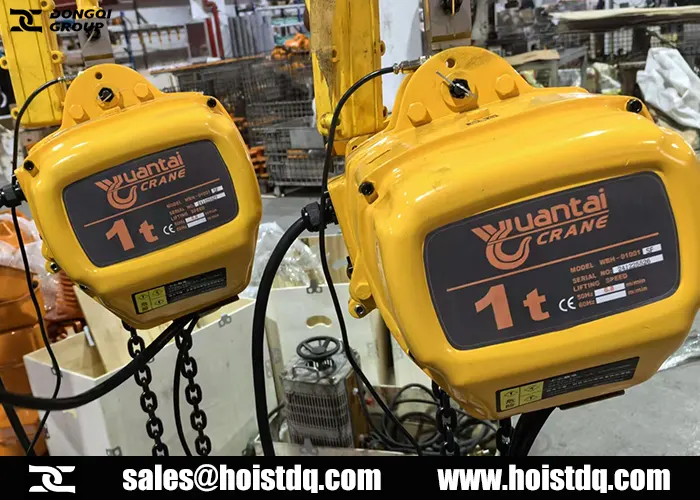
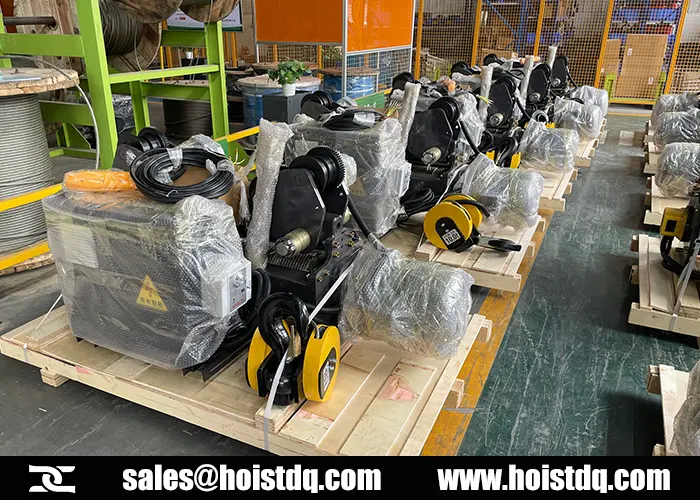
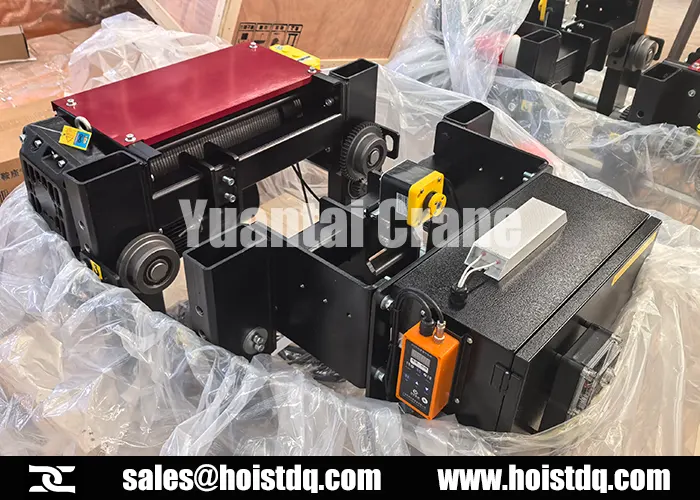
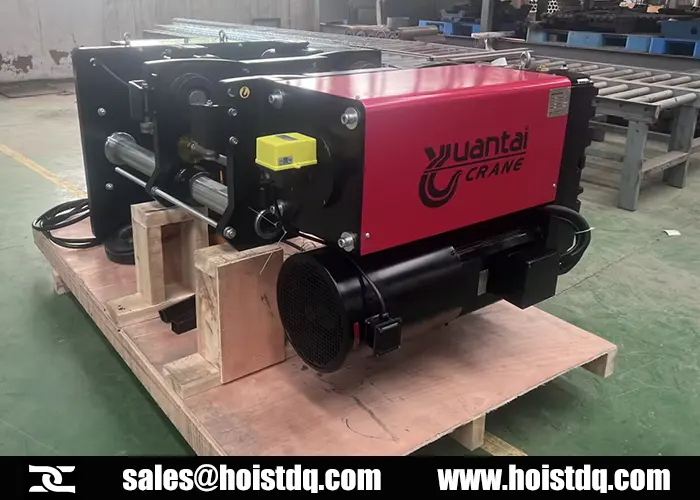
- Equipment: Electric wire rope hoist
- Quantity: 3 units
- Rated capacity: 3 ton
- Lifting height: 9 m
- Lifting speed: 8 m/min (single speed)
- Trolley traveling speed: 20 m/min
- Control method: Pendant push button
- Power supply: 380V / 50Hz / 3 phase
- Cable system: C-type festoon cable
- Supplier: Yuantai Crane
Customer Background
The customer operates a local machining workshop in Indonesia, mainly producing machined steel parts and welded assemblies for nearby factories. The workshop is not a large-scale plant, but production runs are stable and continuous.
Inside the workshop, heavy parts were previously handled by forklifts and manual chain hoists. This worked when production volume was low, but as orders increased, material handling became a bottleneck. In addition, the customer wanted to reduce manual lifting and improve basic safety conditions on the shop floor.
The building structure allowed enough headroom, making it suitable for installing light-duty overhead lifting equipment.
How the Inquiry Started
The inquiry came through Yuantai Crane’s Google independent website. The customer searched for “3 ton electric hoist Indonesia” and submitted a short contact form.
At the beginning, the customer only mentioned:
- Capacity: around 3 tons
- Application: workshop lifting
- Country: Indonesia
No drawings or detailed layout were provided, which is common for small and medium workshops.
Communication and Requirement Confirmation
Instead of requesting full drawings immediately, we focused on understanding how the workshop hoist would be actually used.
During email communication, the following points were gradually clarified:
The maximum lifting load was below 3 tons
Required lifting height was 9 meters
Lifting frequency was moderate, not continuous heavy-duty operation
No strict positioning accuracy was required
Operators preferred simple push-button control
The customer also shared several photos of the workshop and the steel structure, which helped confirm the feasibility of the installation.
Why a Single-Speed Hoist Was Chosen
The customer initially asked whether a two-speed or inverter-controlled hoist was necessary.
After discussion, we recommended a single-speed wire rope hoist for the following reasons:
- Lifting speed of 8 m/min was sufficient for their workflow
- No precision assembly work requiring slow-speed positioning
- Simpler electrical system means lower maintenance risk
- Better cost control for a workshop-level investment
This recommendation helped the customer avoid over-specifying the equipment.
Technical Configuration and Design Details
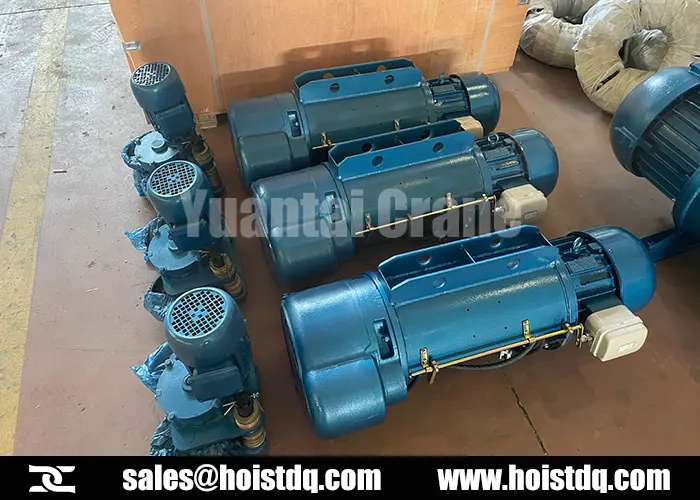
The final solution included three identical 3-ton wire rope hoists, each serving one workstation.
Key configuration details:
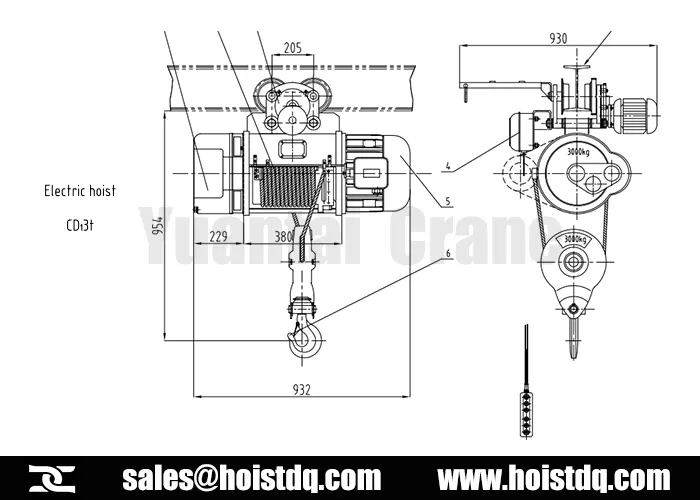
Lifting height: 9 m
Lifting speed: 8 m/min
Trolley traveling speed: 20 m/min
Pendant push button control
C-type festoon cable system for power and control
For local working conditions in Indonesia, special attention was given to:
- Electrical components suitable for humid environments
- Clear and simple wiring layout
- Durable rope drum and steel wire rope selection
- All components were selected with ease of maintenance in mind.
Use of C-Type Festoon Cable System
The 3 ton electric hoists are equipped with C-type festoon cables to support trolley movement.
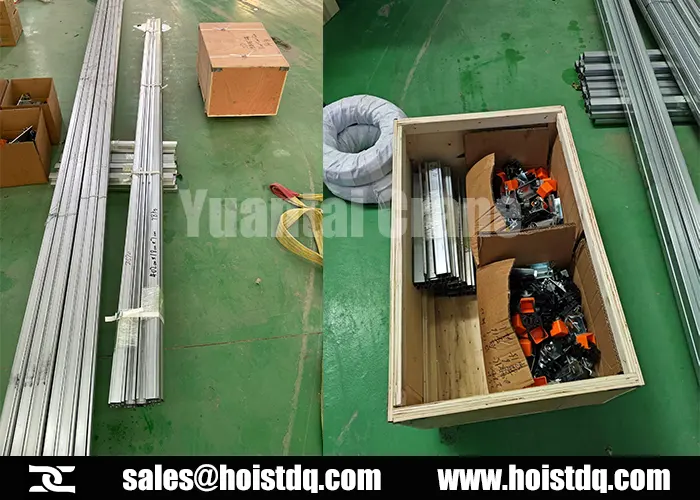
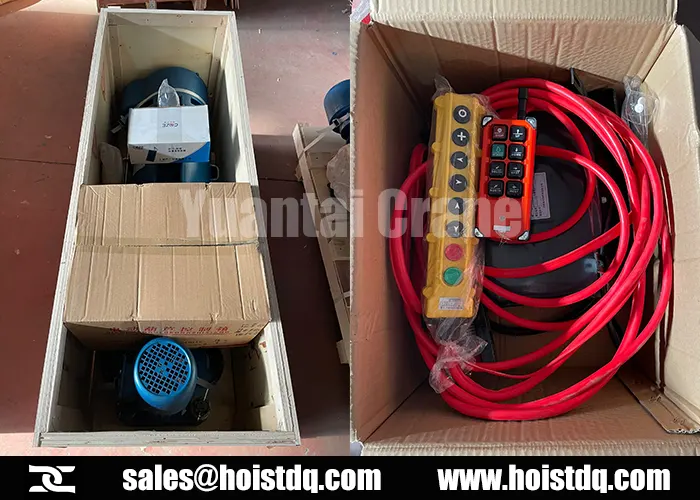
This solution was selected because:
- Traveling distance was not long
- Cable routing needed to be simple and visible
- Maintenance staff could easily inspect and replace cables
Compared with more complex power supply systems, the C-track festoon cable offered a practical and economical choice for this workshop.
Application in the Workshop
After installation, the three sets of 3 ton electric rope hoists were used in:
- Machine loading and unloading
- Handling steel plates and machined parts
- Equipment maintenance and assembly
Each motorized hoist serves a dedicated workstation, reducing internal logistics time and operator fatigue.
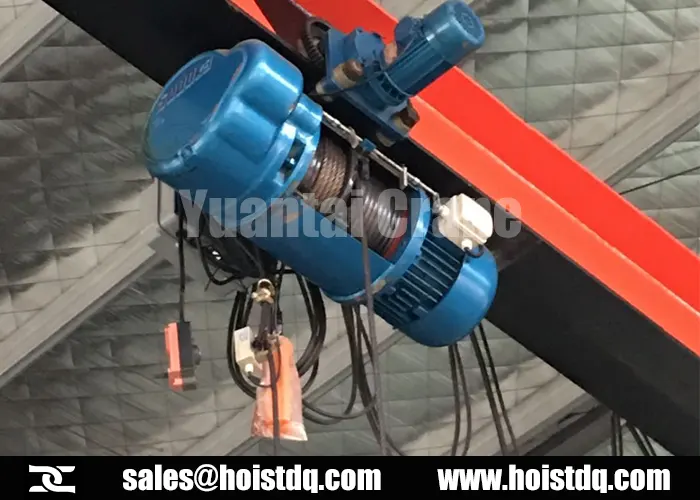
Results after commissioning:
- Material handling efficiency increased significantly
- Reduced reliance on forklifts inside the workshop
- Improved workplace safety
- More flexible production scheduling
What Matters Most to Indonesian Buyers
From this project, several common concerns from Indonesian workshop owners became clear:
- Preference for simple and proven solutions
- Strong focus on ease of operation and maintenance
- Sensitivity to total investment cost
- Need for clear technical explanations rather than complex specifications
- Concern about future spare parts and servicing
These factors often influence purchasing decisions more than advanced features.
How Yuantai Crane Supports Indonesian Customers
Based on long-term cooperation with Indonesian workshops, contractors, and distributors, Yuantai Crane has adjusted its service approach to match local purchasing habits and operating conditions.
Clear and Practical Communication
Most Indonesian buyers do not start with complete drawings or detailed technical documents. Our first step is usually to understand how the equipment will actually be used, rather than requesting full engineering data upfront.
We focus on:
- Actual lifting weight instead of only rated capacity
- Workshop height and available headroom
- Frequency of use and daily working hours
- Operator experience level
This helps avoid unnecessary configurations and reduces project risk at an early stage.
Configuration Based on Local Working Conditions
Indonesia’s working environment often includes:
- High humidity
- Dust in machining and fabrication workshops
- Inconsistent power quality in some industrial areas
For this reason, we pay attention to:
- Motor and electrical component selection suitable for humid conditions
- Clear electrical layout and labeling for local maintenance teams
- Durable wire rope and drum design for long service life
The goal is stable operation with minimal maintenance, not complex features.
Simple and Transparent Quotation
Indonesian customers usually prefer quotations that are:
- Easy to understand
- Clearly defining what is included and excluded
- Without hidden optional items
Our quotations typically include:
- Main equipment specification
- Scope of supply
- Optional items are listed separately
- Delivery time and warranty period
This helps customers compare options and make decisions more efficiently.
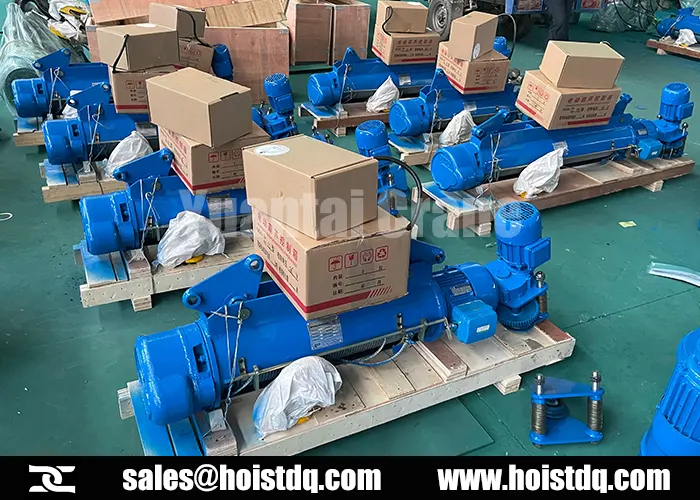
Production Inspection and Testing
Before shipment, each hoist undergoes:
- No-load and rated-load testing
- Brake function verification
- Electrical safety checks
Test records and photos are provided to the customer as needed, particularly for initial cooperation.
Installation Guidance and Documentation
Most Indonesian customers install equipment using their own local teams.
We provide:
- Installation drawings
- Electrical wiring diagrams
- Operation and maintenance manuals in English
- Online technical support during installation
This approach enables customers to control installation costs while still having access to technical support when needed.
Spare Parts and Long-Term Support
For workshop-level equipment, long-term usability is often a key concern.
We support Indonesian customers by:
- Providing recommended spare parts lists
- Supplying wear parts such as wire rope, brake components, and limit switches
- Keeping standard components consistent across similar models
This reduces downtime and simplifies future maintenance.
Conclusion
If you operate a machining workshop or light fabrication facility and need a 1–5 ton electric wire rope hoist, a properly selected single-speed configuration can often be the most practical choice.
Looking for a single speed hoist for your workshop in Indonesia or Southeast Asia? Contact Yuantai Crane to receive a customized solution based on your actual working conditions.